
“Fusion Payments were honest about the industry rates and helped me secure a great rate for my restaurant with no hidden fees. Integration was too easy and seamless.”
Restaurants
Your margin is thin. The card fee doesn't care.
Fusion Payments builds restaurant credit card processing: a counter that keeps pace with the rush, a check that pays at the table from a phone, online ordering that posts to the same ledger — and tips that reach your staff whole, because the program prices the menu, not the tip.
- Quick service
- Full service
- Bars & cafés
- Food trucks
The review is free · bring one month’s statement
Fusion Payments — The fee math
Figures illustrative*
The fee posts a dollar and change per ticket. Volume is what makes it rent.
A room never sees a $1,900 fee line — it sees $1.46 on a $40 ticket, thirteen hundred times a month, netted out before the deposit posts. Add it up across a year and the processor makes more on your food than most items on the menu.
One month, as it posts April · card payments only
Card sales — full-service room, one location
- Settled by card
- $52,000.00
- Average ticket
- $40.00
- Card fee — 2.9% + 30¢ × 1,300
- − $1,898.00
- Deposited
- $50,102.00
What that line costs in a year
- One month
- $1,898.00
- A quarter
- $5,694.00
A year, at that pace
$22,776.00
equivalent: at a five-point net margin, those plates clear the room $2,600 a month — the processor clears $1,898 on the same food
The other way to run it
A cash price and a card price, on the menu and at the counter.
The card price carries the cost of acceptance; the kitchen keeps the price it set — on card volume, the fee comes off the food entirely. It is a different mechanism from surcharging, it works at the counter, at the table, and online — and it prices the meal, never the gratuity. Priced against your own statement, not a brochure.
Read the worked ticket* Figures illustrative — one representative month at a 2.9% + 30¢ blend. Your rate, card mix, ticket size, and tip flow differ, and fixed monthly fees are not shown. Bring a statement; we total yours line by line.
Where the room takes payment
Four ways a table pays. One drawer to close.
The counter and the floor need people — the codes and the site don’t. All four post to the same ledger, so the night closes once.
-
At the counter
01 Tap, and the line keeps moving
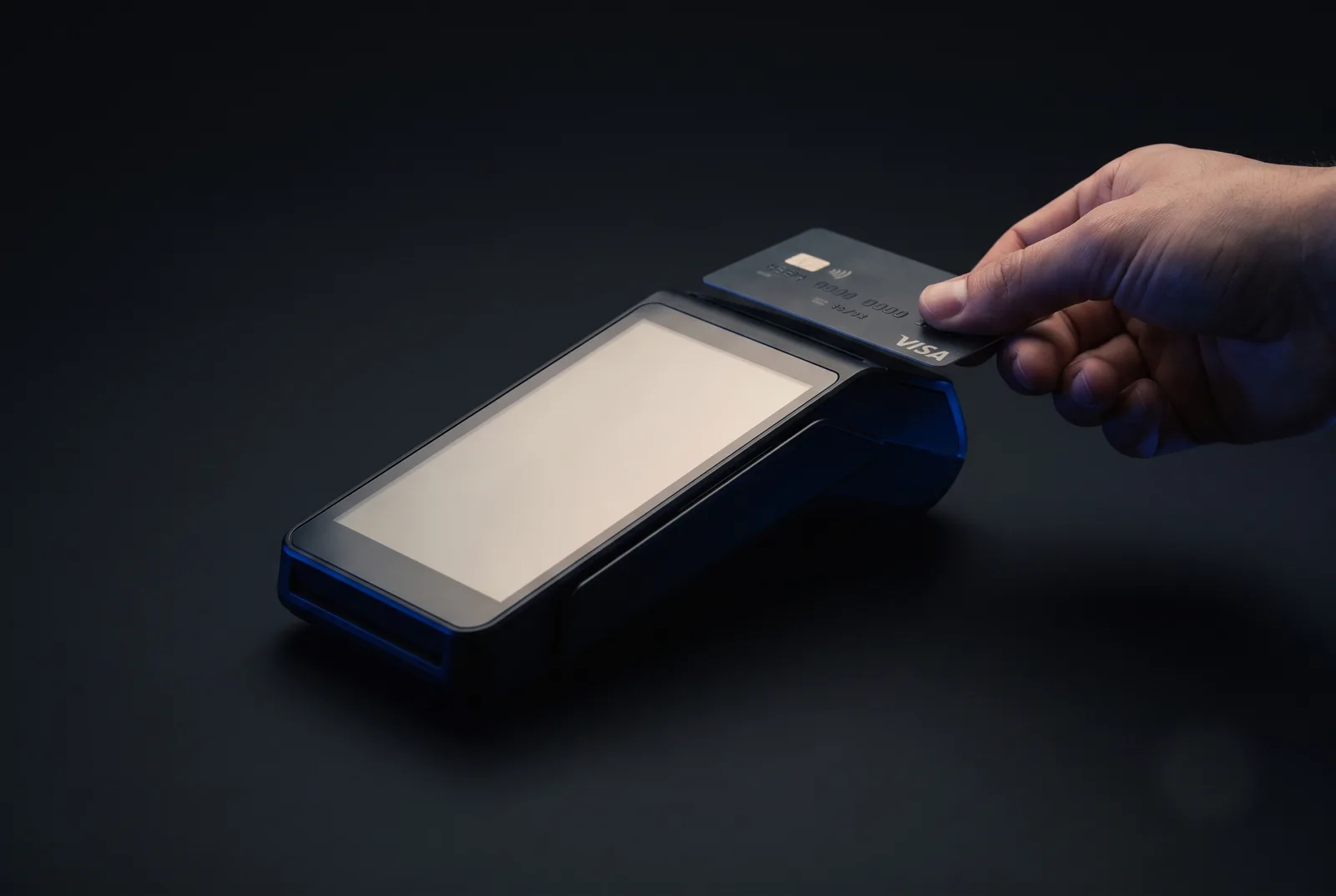
Tap, chip, or wallet at the counter terminal — the receipt is texted before the change would have been counted, and the rush stays a rush, not a wait.
runs: counter terminal · tap, chip, wallet · seconds a ticket
-
At the table
02 The check pays where it’s read
A code on the check opens the payment in the guest’s own browser — tip line included, no app, no account. The card never leaves the table, and the server never walks it away.
moves: check → phone → posted · card stays at the table
-
In the order queue
03 Online orders, same rail
The website’s orders post through the same stack into the same ledger as the dining room — one processor, one close, no second statement to read.
posts: site → same rail · one ledger · no second processor
-
At close
04 The drawer closes once
Counter, table, and online settle as one batch matched to the deposit, with gratuity itemized for payroll. The night is reconciled before the chairs go up.
settles: one batch · tips itemized · before the chairs go up
* Tips ride each payment and land with your staff — the two-price program prices the menu, not the gratuity.
Fusion Payments — The other practice
Your website, handled.
Fusion Payments builds and hosts the sites its payment stacks run behind — one vendor, one accountable team, from the first visit to the deposit. If yours is due for a rebuild anyway, ask about the website program.
See the web practice
terms: asked for, not posted — priced alongside your statement reading
The counter
The rush is the test. The terminal should be the fastest thing on the line.
-
The rush doesn’t queue
Tap or wallet at the counter, receipt by text, ticket time in seconds. At the lunch peak the terminal is the one piece of equipment that never backs up.
runs: checkout in seconds · receipt by text
-
Tips land where they belong
The gratuity rides the payment and is itemized at close for payroll — staff are paid whole, and the two-price program never touches the tip line.
holds: gratuity itemized · staff paid whole
-
The morning after is one screen
Counter, table codes, and online orders post as one batch, matched to the deposit. Yesterday closes before prep starts.
posts: three channels · one ledger · txn ↔ deposit
Fusion Payments — From the record
Source: Google · Reproduced verbatim
On rates, said plainly to a restaurant.
extract: 01 of 07 on record · uncompensated, unedited
The complete recordFusion Payments — Questions from the room
Asked over the pass. Answered plainly.
Five questions owners actually ask, answered the way we answer them on the phone — the tip question first, because it is always first.
- Index
- 05 questions
- Revision
- 2026-08
- Asked of
- A person, first
IDQuestion
Q-01How do tips work under a two-price program?
The gratuity rides the same card payment and is itemized at close, so payroll sees it whole — your staff are paid the tip the guest wrote. The program prices the menu: the card price carries the cost of acceptance on the food, not on the tip line. How the tip prompt is presented differs between counter service and table service, and we walk that setup with you before launch rather than leaving it to a default.
Q-02Do my customers have to pay the card price?
No — that is the point of posting two prices. The menu shows a cash price and a card price; the guest chooses how to pay. Cash pays the cash price, the card price covers what the card costs, and neither guest subsidizes the other. Posted plainly, it reads as fair — because it is.
see: The worked ticket
Q-03Can guests pay at the table without an app?
Yes. The code on the check opens a payment page in the guest’s own browser — no app to install, no account to create. The tip line is on the page, the receipt arrives by text or email, and the card never leaves the guest’s hand.
Q-04Does online ordering post to the same ledger?
Yes. Orders from the website settle through the same stack as the dining room and post to the same ledger, so the close is one close. If you already run an ordering platform, bring its name to the statement review and we will confirm the integration path before anything is signed.
Q-05What if I already have a website?
Keep it — or let us look at it. Fusion Payments builds and hosts websites as its second practice: menus, online ordering, and the payment page on the same stack that runs your counter. It is priced alongside your statement review, so ask about the website program when you bring the statement.
see: The web practice
*If your question is about a specific POS or ordering platform, ask it at the review — with the statement on the table, the answer is usually a demonstration.
Start here
Tell us how your business gets paid today.
We map the practical path from the invoice or the sale to the deposit, and the systems it has to reach.
call: (407) 395-2832 · a person answers, not a queue
write: info@fusionpayments.com · read by the people who build
* The first conversation is a reading, not a pitch — bring last month's processing statement and leave with every line on it explained. No fee, no obligation.